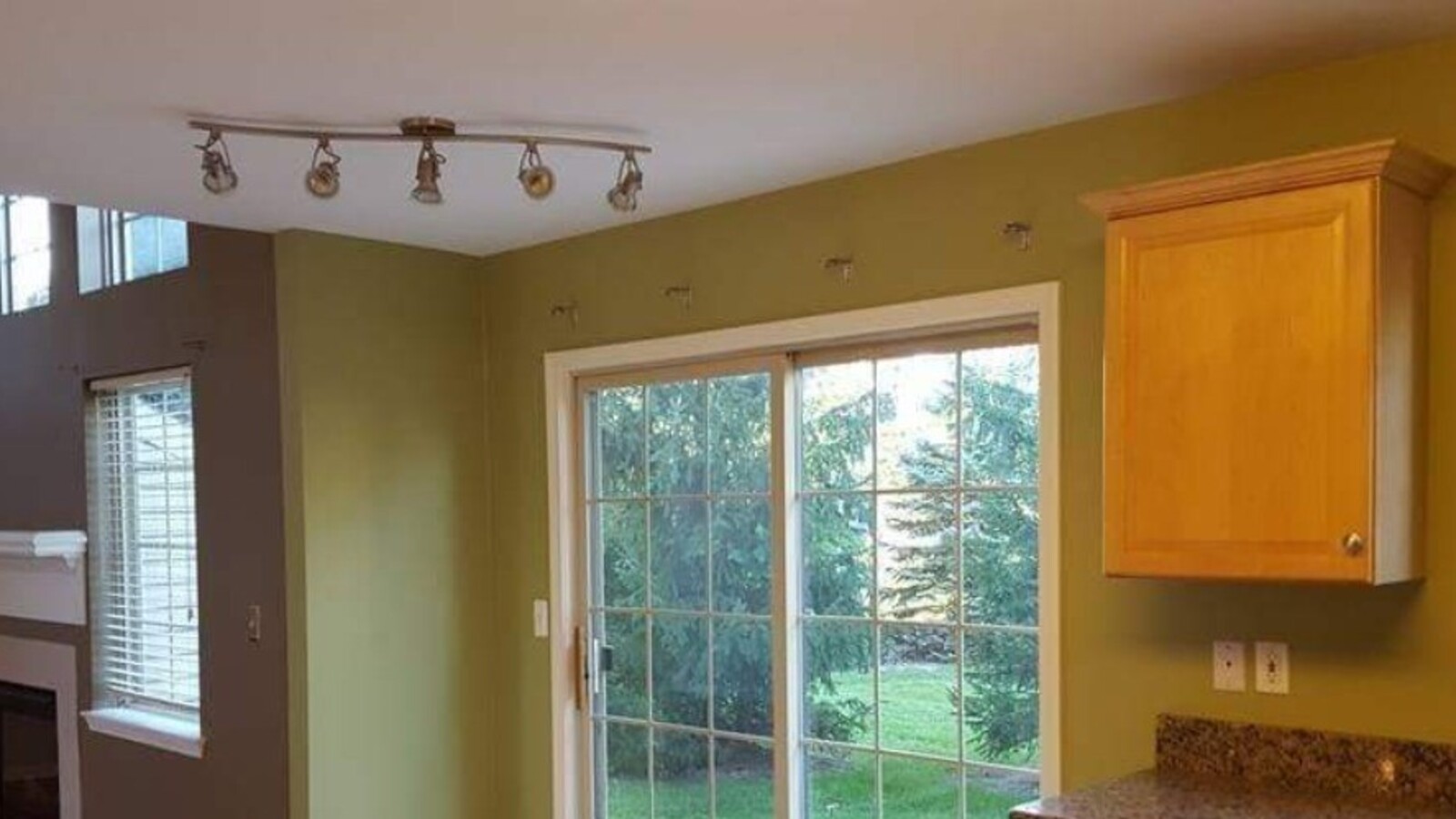
Most interior projects begin with one room a homeowner keeps thinking about. It may not be urgent, but something about the space no longer feels right.
Planning now does not mean painting now. It gives you time to understand the room and make better decisions.
1. Begin with the room—not the color
Identify the space and explain what has been bothering you. You do not need final colors, a complete surface list or a firm schedule before beginning the conversation.
2. Decide what actually belongs in the project
Walls, ceilings, trim, doors, baseboards, stairways and railings may all be visible from one place, but they do not automatically belong in one all-or-nothing project.
- What definitely needs attention?
- What might be optional?
- What is still in good condition and should remain unchanged?
3. Identify repairs and special conditions
Drywall damage, stains and other conditions may require attention before painting. A clear scope prevents necessary work from being missed and unnecessary work from being added.
4. Plan the room before choosing the color
A color lives beside flooring, cabinets, countertops, furniture, natural woodwork, trim, doors and adjoining spaces. View samples in the actual room during the morning, afternoon and evening and under artificial light.
5. Put the project on the right calendar
Early planning creates options. It does not obligate you to paint immediately. When the timing is right, the important decisions are already understood.